Restoration
Restoration of plucked and bowed stringed instruments.
Workshop approach
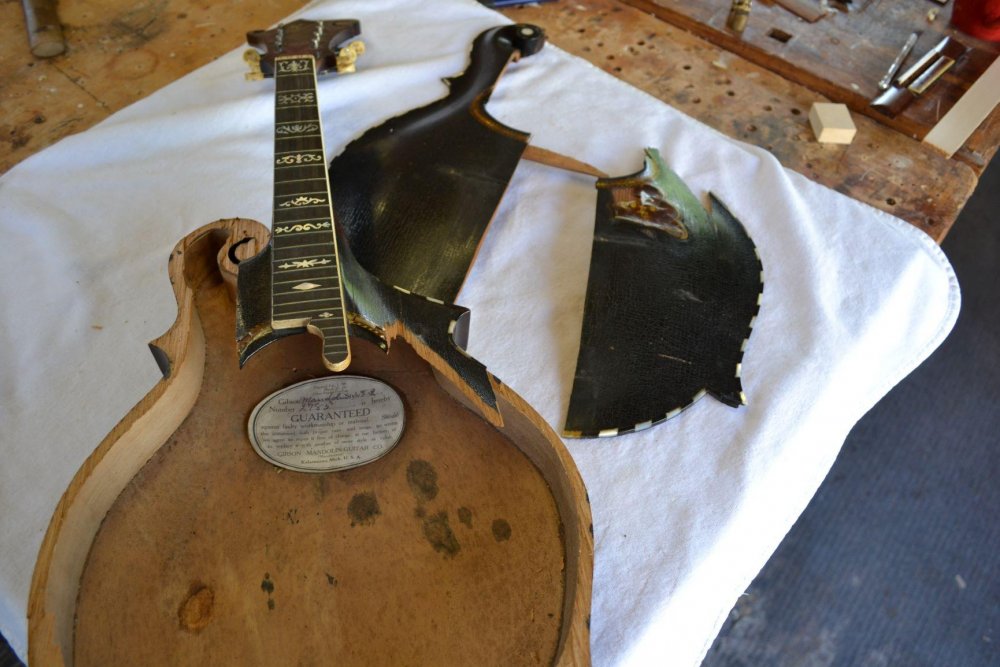
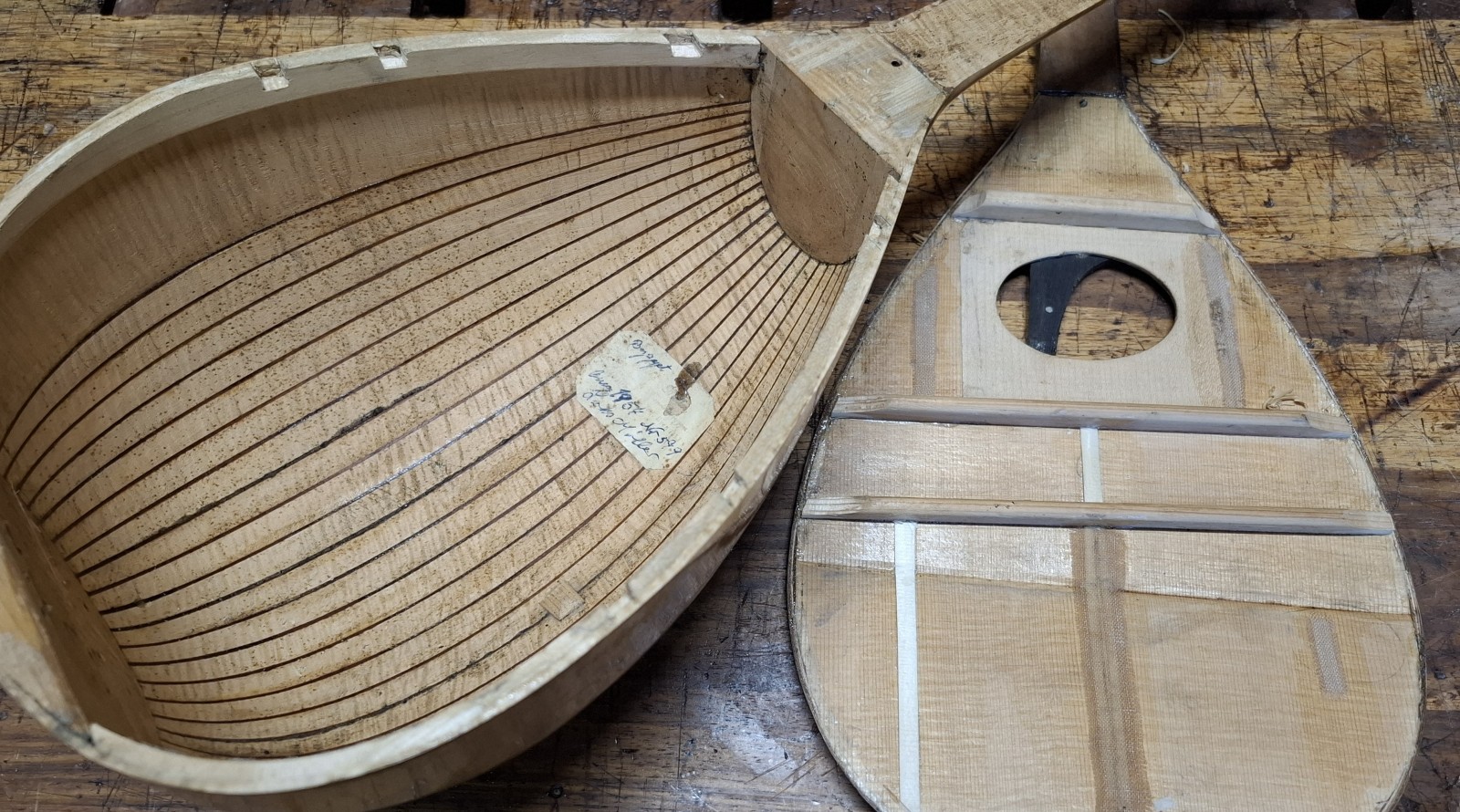
Restoration forms the foundation of my workshop practice. Since 1994 I have worked with professional and dedicated amateur musicians throughout Melbourne, supporting instruments used in classical, early music, jazz, and contemporary settings.
My early training was in violin bow restoration before expanding into violin, guitar, mandolin, lute, and related instruments. This breadth continues to inform my work today.
Restoration in the workshop is guided by three principles:
structural integrity, historical sensitivity, and long-term musical function.
Traditional materials and methods are employed where appropriate. Hide glue is used for its strength and reversibility. Spirit varnish applied in the French polish method, and traditional oil varnish where historically appropriate, are used in keeping with original working practice. Repairs are undertaken with careful consideration of the instrument’s materials and construction.
Where timber replacement or structural reinforcement is required, seasoned woods from my workshop stock are selected to match density and character as closely as possible. In appropriate contexts, controlled UV exposure and traditional ground treatments may be used to integrate new work visually with existing surfaces. These processes are applied conservatively and only where they serve the instrument’s continuity.
The aim is not to make an instrument appear new, but to ensure that necessary work sits naturally within its history.
Not every intervention improves an instrument. Part of restoration practice is knowing what to leave untouched.
Scope
I undertake restoration of fine plucked and bowed stringed instruments, including classical and historical guitars, violins and bows, mandolins, lutes, and viols.
The workshop also works with instruments from Mediterranean and Middle Eastern traditions — including oud and bouzouki — particularly where structural repair, neck work, or soundboard restoration is required. These instruments are approached with the same emphasis on integrity, restraint, and long-term musical function.
Each instrument is individually assessed before work is proposed.
Nature of work
Work undertaken ranges from precise setup and tonal refinement through to significant structural restoration. Interventions are proposed only where they meaningfully serve the instrument’s long-term stability and musical performance.
Turnaround time
Turnaround times vary according to scope and complexity. Minor work may take several weeks; major restoration projects may require several months.
Bookings are essential and waiting periods are common.
Enquiries
Enquiries are welcome from professional musicians, dedicated amateur players, and custodians of fine instruments. To discuss your instrument or arrange a workshop visit, please contact me by email.
Initial Assessment
When making an enquiry, please include several clear photographs of the instrument — typically full front and back views, the neck and head, and any areas of concern. This allows for an informed preliminary assessment and helps determine the appropriate course of action before a workshop appointment is arranged.